
Technosapiens - The Rise of Technocentric Communication
An investigation into the origin of communication and where it is going.

By
Thiago Patriota
- Published
- July 8, 2023
- Reading
- 8 min read
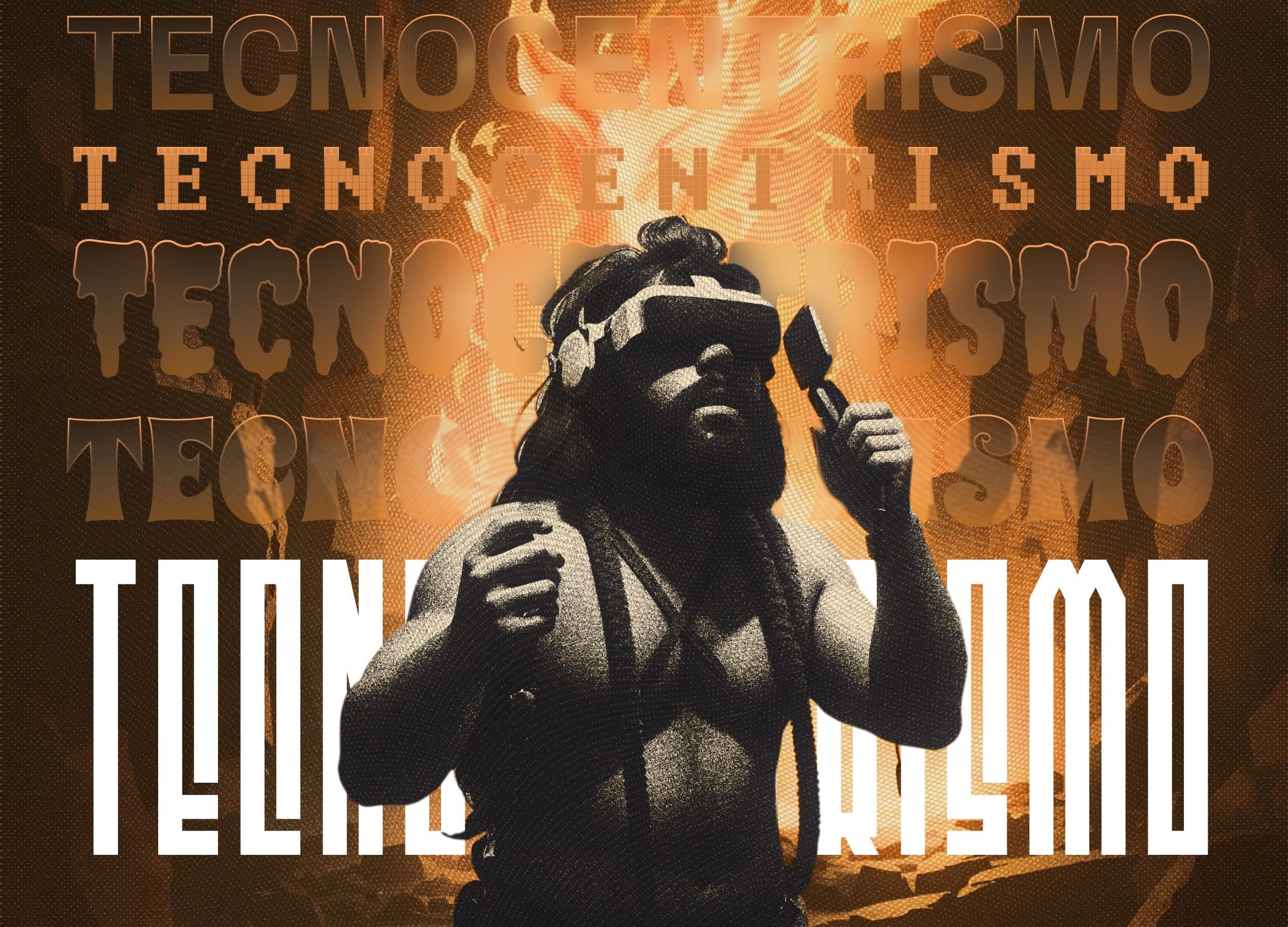
Article originally published in Agency Brasil on September 2, 2024.
The first and true human technology, unlike those that came after and which tend to come with every new pioneering vanguard, was actually discovered, not created. For fire, a primordial and technological manifestation of nature, contrary to Hellenistic belief, was not stolen from Mount Olympus by Prometheus, but rather domesticated by Homo (Man) Sapiens (Knower) approximately 800,000 years ago (1), even before man began to form elaborate and intangible structures called cultures. This discovery was a consequence of the cognitive evolution of our species which, like a bank opening credit lines for students, began to reallocate energy from the biceps and body muscles to the brain, which accounts for around 2.5% of body weight, but consumes 25% of the body's energy (2). The use of tools, however, had already been happening for 2 million years (1), helping our primate ancestors survive different types of threats and predators, but it was only after the technological adoption of fire that it became possible to cook food, transforming the chemistry and biology of raw ingredients into final products that were nutritious, safe and more delicious.
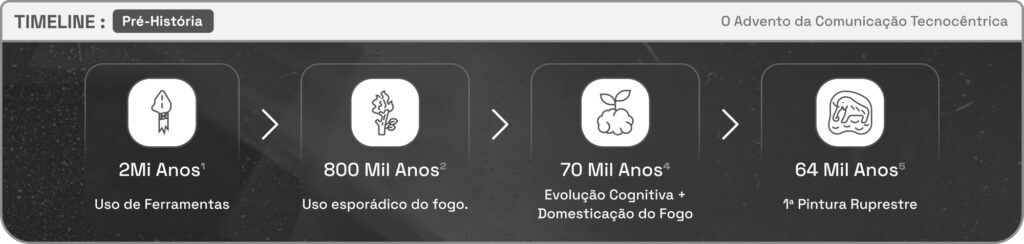
Fire, as technology and adapted natural force, came to be used to defend, protect and illuminate in the same instance that it was also used to attack, subjugate and threaten, leading our species not only to the top of the food chain, but also enabling the territorial expansion of Homo Sapiens as communities that now possessed an obedient force with practically unlimited capabilities for use. Thus clearing a new horizon where we would be more capable of exploring new facets of our intellectual capacities; we were not the first organisms to develop a communication system, but even before we possessed an elaborate linguistic dialect, we explored what Yuval Noah Harari, author of Sapiens: A Brief History of Humankind, labels as "Sapiens Language" (3) the vocal capacity to signal dangers and other types of signals. Like a limited-storage CD-Rom and as a consequence of needing to share increasingly more information about the world, our language evolved as a way to share gossip, since Homo Sapiens is a social animal.
Verbal expression, even without complex dialects to convey the details of a message, was fundamental to the historical and evolutionary legacy of our species and to the emergence of new ways of thinking. Once again, we had a unique aspect that separated us from other living species, for while communicating about the material world was a trait of all organic life aimed at survival or reproduction, both the plantae kingdom, the fungi kingdom, and the animalia kingdom have always communicated with each other in what could be considered an analog and organic internet; however only Homo Sapiens was capable of transmitting information about things that did not exist: Legends, myths, gods and religions began to populate the collective conscious and unconscious during the cognitive revolution, dated 70,000 years ago (4), through verbal expression, the world of ideas, coined by Plato around 400 BCE finally reached the real world and the senses thanks to language and would go on to have an impact as immeasurable as the intangibility of what was being spoken. The forms of animals merged in the unconscious of our ancestors and created images that eventually took shape in verbal language where a tiger manifested itself in the mind of a tribal leader and thus became a sacred guardian of the entire community. This small but profoundly significant aspect of the evolution of our communication became fundamental to distinguish us even more as a species by the simple fact that the ability to fictionalize the world was the most singular characteristic of our language, since it impacted not only feelings but also our biological thermometers and ideological yearnings.
Myths nourished and still feed the unprecedented capacity of humans to cooperate and act in concert not only in great numbers but also aiming for the same objectives, but in the absence of methods, they were shared only as verbal timbre, passed down by fires through generations in stories of wisdom by tribal elders and guarded by the young as answers to many mysteries of nature that had not yet been unveiled. It was only when our species began to express itself in a more permanent, artistic and artisanal manner, with the drawing and painting of symbols in caves, that man began to tread a path of distributing knowledge without it being deteriorated or lost to the ravages of time. It was shortly after the beginning of the cognitive revolution that man began to explore cave art, the oldest known painting is a red hand stencil in the Maltravieso cave in Cáceres, Spain, which was dated using the uranium-thorium method with an age greater than 64,000 years and was made by a Homo Sapiens Neanderthalensis. (5) The representation of shapes and animals served as a reference from the wisest to the young members of the community who would face the challenges of wild life, but this time, with more preparation and education about what they would have to face during their lives.
Communication, fiction, myths and gods thus became some of the first intangible aspects of human society; culture as a byproduct of survival - hierarchy - education - customs - knowledge - history and information came to not only clothe the collective imagination but also, through time, evolved into new spheres of social organization such as commerce - politics - medicine - literature - law - sports - religion - cinema - gastronomy - fashion - music - architecture and sustainability that represented above all, intangible ideas of the collective imagination. Like a digital file in .ZIP format, human culture began to evolve and accumulate not only more knowledge, but many technologies that through the application of scientific knowledge, tools and techniques, as intellectual properties of humanity, would go on to not only facilitate our lives, but also encompass a wide range of resources and innovations that would unequivocally optimize our ability to interact with the natural world.
Nevertheless, human communication, kickstarted by vocal, visual and then verbal language, continued to evolve proportionally to the complexity and quantity of information and messages that needed to be passed between families - tribes - castles - fiefdoms - cities - empires - states - countries and finally continents. Around 3,000 BCE (6), Egyptian civilization invented, through the processing of a plant they considered sacred, Cyperus Papyrus, the self-titled papyrus. Thus, the first "pilot" industrialization of paper became possible, which facilitated the advent of not only parchments but also the documentation and recording of sacred and governmental writings. This innovation proved profoundly significant since the only means possible for records before it were much less sustainable, these being: clay - stone - wood - bone and animal hide. About a millennium later, in 2,000 BCE in Mesopotamia (7), the Sumerians were already beginning to write "The Epic of Gilgamesh", which is considered the first and oldest literary work in the world, written on clay tablets, the work translated a collection of poems of the deeds of the hero Gilgamesh and his quest for immortality. Half a millennium later, around 1,200 BCE the Phoenicians (8) synthesized through the adaptation of the Semitic alphabet, the first purely phonetic alphabet, the Phoenician alphabet, which was later adapted by the Greeks and gave rise to the Latin alphabet which is the most used today.

From this point in time on, human communication remained analog and rudimentary for about 3 millennia until the mid-1500s CE, when German inventor Johannes Gutenberg commercialized the movable press (9), the tool responsible for industrializing communication as never before in the history of mankind, large-scale reproduction of images and texts would accelerate the rate at which information was produced, recorded and distributed in such a way that human scientific knowledge found in the literary foundation the foundation of printing. What followed after that, two and a half centuries later, in 1850 CE, was the advent of the industrial revolution, kickstarted by the United Kingdom which initiated a period of profound economic and technological transformation that characterized the transition from manual production methods to automation through machinery; transforming the global economy forever and leading to advances in manufacturing, transportation and communication. With the invention of industrial machines, electronics became increasingly popular and in that same period, in London, Ada Lovelace published the first algorithm written specifically for implementation on a computer (10). Communication, which previously presented itself as analog, began to take new forms through electronics and in the next century, inventions such as the telegraph, telephone, radio and television charted a new era of unprecedented information flow.

History now walks toward the present deeply intertwined with the internet, a world of infinite possibilities where the only limitation is the mind. The same mind that was already capable of creating writing and science and that could never again prevent its progress. The same mind that dreams of the intangible and creates the impossible. History arrives at the future, a new reality of infinite dimensions, a place where everyone meets with information from the past - present and future.
The future, thus, swallows the past and becomes the present, plunging us into deep synergy with the technology that through artificial intelligence and natural language models, today receive the syntaxes of our languages, interpret our words, process my and your abstractions and deliver the purest automation in the form of sustainability regarding our most valuable raw material, our time. Prometheus, however, may not have stolen fire from Mount Olympus, but humanity would not hesitate to discover that through fire, the perfect point of flesh could come to be found. Humanity would not hesitate to find once again in technology, not only the key to the automation of its productivity but also, in a primordial way, the fire of its existence.
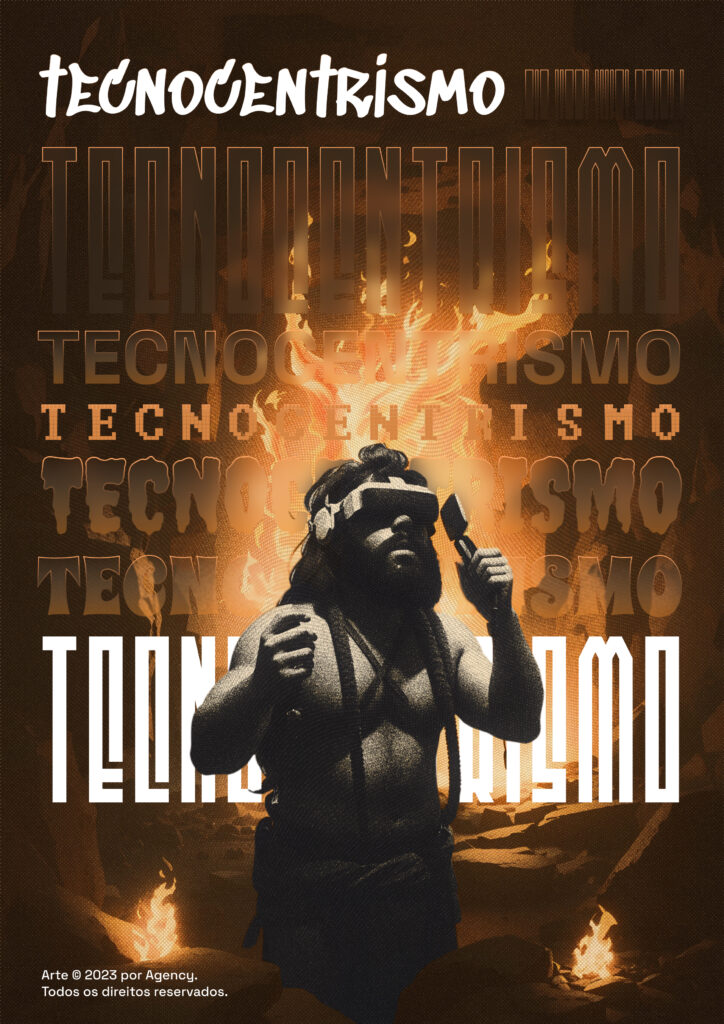
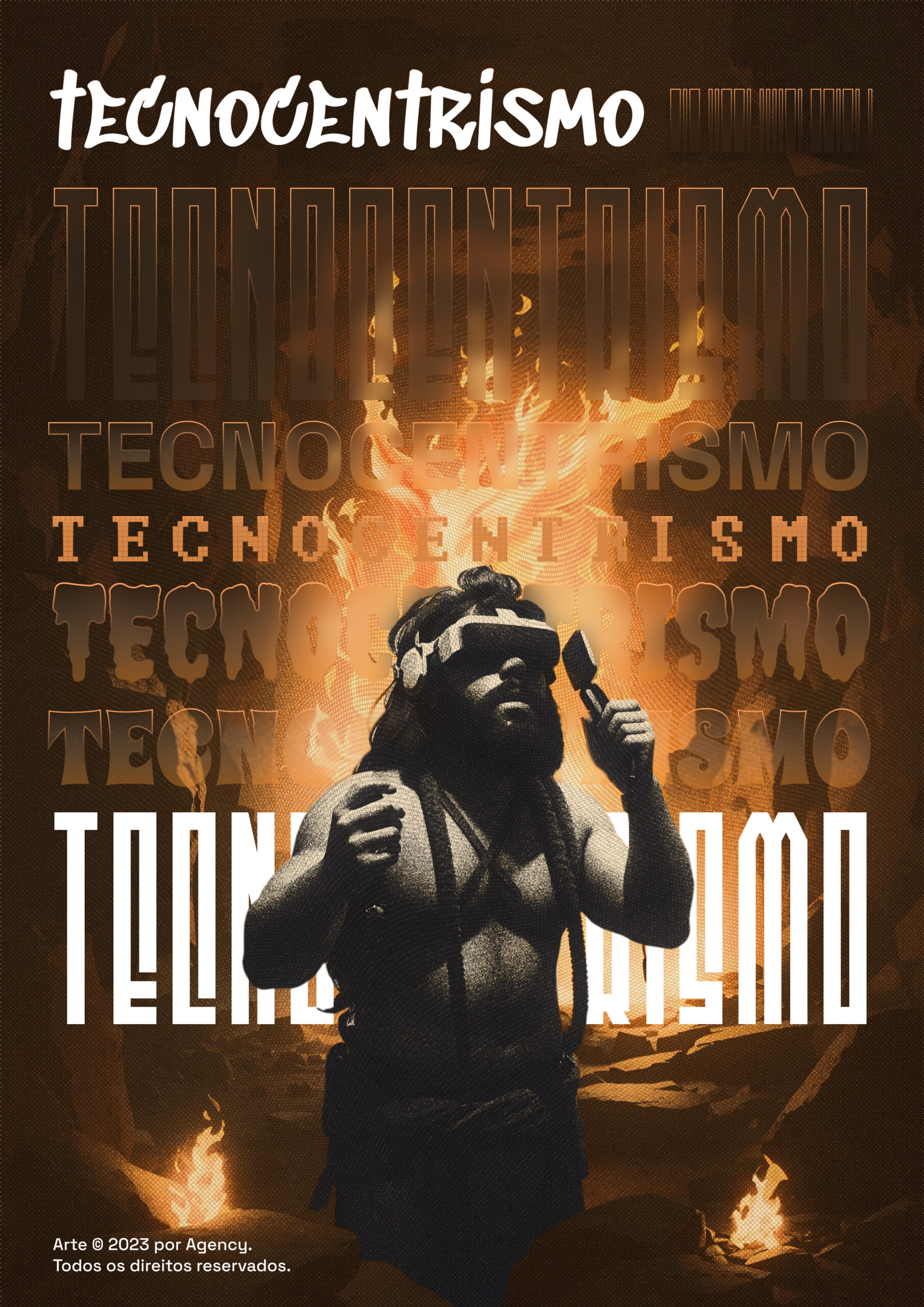
Collectible Poster
Bibliographic References
(1) - Sapiens P.20, Yuval Noah Harari.
(2) - Sapiens P.17, Yuval Noah Harari.
(3) - Sapiens P.30, Yuval Noah Harari, Footnote.
(4) - Sapiens P.11, Yuval Noah Harari.
(5) - Wikipedia, https://en.wikipedia.org/wiki/Cave_painting#cite_note-Hoffmann2018-9
(6) - Unesp - Enio Yoshinori Hayasaka, Silvia Mitiko Nishida, https://www2.ibb.unesp.br/Museu_Escola/Ensino_Fundamental/Origami/Documentos/indice_origami_papel.htm
(7) - Brasil Escola, https://brasilescola.uol.com.br/o-que-e/historia/o-que-e-epopeia-gilgamesh.htm
(8) - Wikipedia, https://pt.wikipedia.org/wiki/Alfabeto_fenício
(9) - Wikipedia, https://pt.wikipedia.org/wiki/Prensa_móvel
(10) - History Computer, https://history-computer.com/ada-lovelace-complete-biography/
You may also like
All posts → № 01
№ 01From Abacus to Algorithm: The Dilemma of Artificial Superintelligence
 № 02
№ 02Sentient Manifesto
 № 03
№ 03